
A Tuesday thought from Caleb Rensai
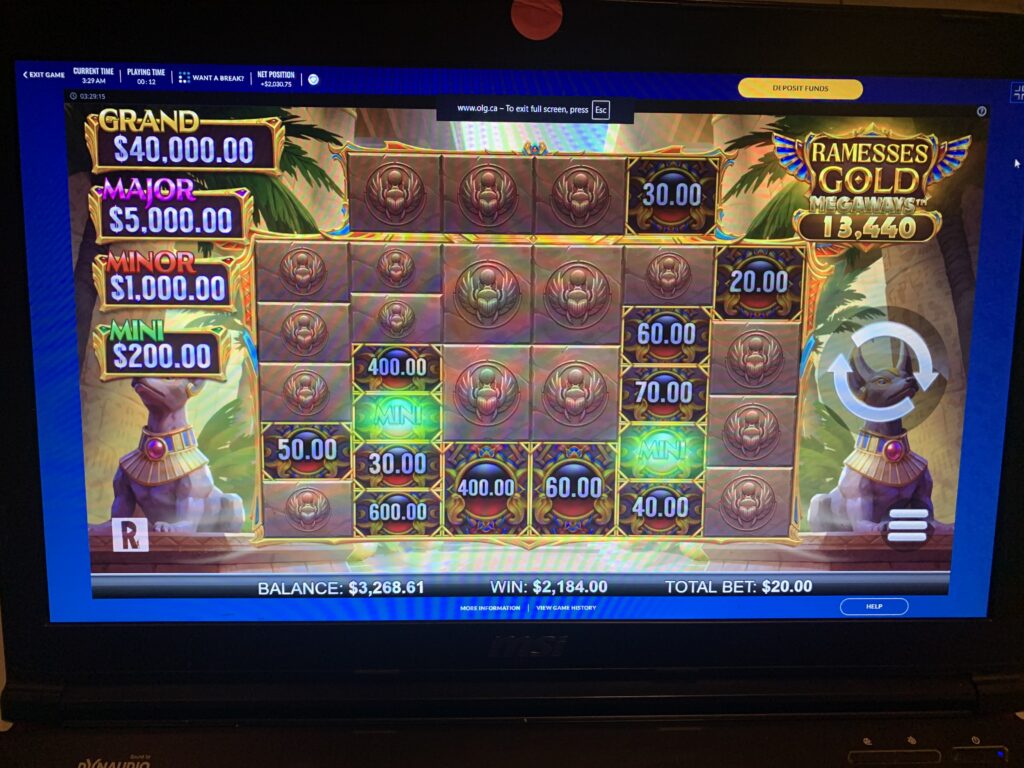
I went down another gambling rabbit hole this week. This one started with a simple question: how big has online gambling actually become in Ontario? I expected to find some interesting numbers, maybe a few stories about sports betting and online casinos, and then get on with my day. Instead, I discovered an entire industry growing behind that little button that says Spin.
And I also discovered something that made me stop and look twice: Osgoode Hall Law School at York University offers a Certificate in Gambling Law.
Yes, gambling law.
Apparently, the casino has lawyers now. Somehow, that feels both completely logical and slightly amusing. I can imagine someone saying, “I want to work in gambling,” and their parents asking, “Are you going to be a dealer?” No, Mom. I’m going to study the Criminal Code, privacy law, cybersecurity, anti-money laundering and artificial intelligence.
Times have changed.
According to iGaming Ontario’s latest market-performance report, the regulated online gambling market generated about $400.6 million in gross gaming revenue from $9.46 billion in wagers in June 2026 alone. These figures cover operators working with iGaming Ontario and do not include OLG’s own iGaming offering.
Before we get too excited about that $9.46 billion, though, there is an important distinction. Wagers aren’t revenue. If I take $100, lose it, and somebody else wins it, we haven’t created $200 of new wealth. We’ve simply moved $100 from one pocket to another, with the casino taking its share along the way. The headline number is impressive, but the economic story is much more interesting when we look at jobs, business activity and government revenue.
And Ontario has already seen a substantial economic effect. Deloitte’s second-year analysis found that the regulated iGaming market supported an estimated 14,935 full-time-equivalent jobs and contributed about $2.7 billion to Ontario’s GDP, while generating an estimated $1.245 billion in federal, provincial and municipal government revenue.
That’s quite a change from the old image of gambling as a guy sitting at a blackjack table arguing with the dealer about whether he should have hit on 16.
Today’s gambling industry needs programmers, cybersecurity specialists, financial professionals, compliance officers, data analysts, marketers, customer-service teams, responsible-gambling specialists and lawyers. A lot of these jobs don’t look anything like what we traditionally think of as a “gambling job.”
That’s one reason I became interested in the Osgoode program.
The Osgoode Certificate in Gambling Law is a five-module professional program running in October and November 2026. It is designed for people working in the gaming industry with or without a law degree, and the curriculum covers much more than simply understanding gambling legislation. It gets into regulation, compliance, responsible gambling, anti-money laundering, privacy, advertising, cybersecurity, player-tracking technology, software testing, cross-border online gambling and even the impact of AI on gambling law.
That last one really caught my attention: AI and gambling law.
Twenty years ago, I don’t think anybody imagined that one day we would have to ask what artificial intelligence means for gambling regulation. Back then, the biggest technological question at the casino was probably whether the ATM had enough money.
Now we have algorithms, data analytics and increasingly sophisticated online platforms. A modern gambling company can know a tremendous amount about its customers, and that creates both opportunities and responsibilities.
The technology behind online gambling is actually fascinating. When I open a gambling app, I see a game. Somewhere behind that screen, however, there are payment systems, security systems, identity verification, data systems, game-testing processes and regulatory controls all working together. I press a button; somewhere else, an impressive number of computers have a very busy day.
And that is where the job story becomes interesting.
Ontario’s iGaming sector isn’t just employing people directly. It also supports businesses that supply technology and professional services to the industry. Deloitte’s analysis estimated that most of the jobs supported by the sector were actually indirect or induced jobs, rather than jobs directly employed by gaming operators.
So the economic impact goes well beyond the casino company itself.
A lawyer who specializes in gaming regulation is part of the gambling economy. So is the software developer building the platform. So is the cybersecurity professional protecting customer information. So is the accountant dealing with the financial side. So is the compliance specialist making sure the company doesn’t accidentally step over a regulatory line.
And that regulatory line can apparently be quite long.
This is why a course like the Osgoode Certificate makes sense. The bigger and more sophisticated the industry becomes, the more people you need who actually understand how all the pieces fit together. Osgoode describes the program as an intensive five-day learning experience covering the legal and practical issues professionals encounter across the gaming industry. The current fee is $3,395 plus tax, and the program is available both in person and live online.
I have to admit, I’m tempted to take it.
Not because I want to become a gambling lawyer. Although Caleb Rensai, Esquire does have a nice ring to it. I can already picture myself walking into a casino carrying a briefcase and saying, “Don’t worry, I’ve read the regulations.”
The slot machine would probably ignore me.
But seriously, the more I learn about gambling, the more I realize that understanding the industry is just as interesting as understanding the player.
And there is an important distinction between the two.
The industry sees revenue, employment, technology, regulation and economic growth. The player sees a win, a loss, a bonus, a near-miss or the temptation to make another deposit.
Both perspectives are real.
Ontario can benefit from a growing regulated industry while we still need to take gambling harm seriously. In fact, I think the bigger the industry becomes, the more important responsible gambling becomes. Economic growth and player protection shouldn’t be enemies. A mature industry should be capable of doing both.
That is probably what interests me most about where gambling is going.
We used to think of gambling as something that happened in a casino. Now it happens on our phones, and the industry surrounding it looks increasingly like a combination of technology, finance, entertainment and professional services.
And that means the people working in gambling need to understand more than gambling.
They need to understand people.
Because behind all the software, regulation and billions of dollars in wagers is still one person sitting in front of a screen thinking, “I’ll just play for a little while.”
I know that sentence.
Most gamblers know that sentence.
Sometimes “a little while” really is a little while. Sometimes it isn’t.
That’s why I think the most interesting part of the future of gambling isn’t whether the market will continue to grow. It probably will. The more interesting question is whether our understanding of gambling can grow along with it.
Can we build better technology without making gambling harder to control? Can we create jobs and economic opportunities while protecting vulnerable players? Can regulators keep up with technology? Can businesses make money while taking responsible gambling seriously?
Those are much more interesting questions than simply asking whether online gambling is becoming popular.
Because it already is.
Ontario has created a substantial regulated market, and that market is creating jobs, attracting professional expertise and contributing to the provincial economy. The industry’s own economic analysis projects even greater employment and economic contributions over the longer term, although those figures are projections rather than guarantees.
For me, though, the lesson is a little more personal.
The more I learn about gambling, the less interested I am in becoming an expert at how to gamble and the more interested I become in understanding why we gamble, how the industry works, and what happens to us when we do it.
Maybe that’s the kind of gambling education we need more of.
Not another person promising to tell us which machine is “hot.”
Not another strategy that supposedly knows when the jackpot is coming.
But people who understand the business, the law, the technology, the psychology and the human being sitting in the chair.
And perhaps that’s why I found the Osgoode course so interesting.
The gambling industry has become complicated enough that it now needs lawyers, engineers, economists, psychologists, compliance specialists and regulators just to keep the wheels turning.
The player still only needs one finger.
Unfortunately, that finger is very good at finding the Spin button.
One more thing before I go…
The more I look at where gambling is heading, the more I realize that the interesting story isn’t simply about how much money is being wagered. It’s about what happens to all of us when technology makes gambling easier, faster and more personal than ever before.
That is the part I want to keep exploring here at Spin Mindfully.
I’ll be looking at the business behind online gambling, the psychology behind that little voice saying “one more spin,” the technology changing the games, and the people and laws trying to keep up with all of it. And, of course, I’ll keep coming back to the player—because behind every statistic, every billion-dollar market and every beautifully designed casino app, there is still a human being making a decision.
Sometimes a very good decision.
Sometimes… let’s just say, a decision that looks better after a good night’s sleep.
So I’ll leave you with this question until my next article:
As gambling becomes smarter, faster and more convenient, are we becoming smarter gamblers—or are we simply getting better technology to help us make the same old mistakes?
That’s a question worth exploring.
And I have a feeling the answer is going to be more interesting than the next spin.
Until next time,
Caleb Rensai
Spin Mindfully — Mindful Spins. Happy Wins!