
By Caleb Rensai | Spin Mindfully
Mindful Spins. Happy Wins!
After more than 20 years of playing online slots, I’ve come to realize that slots are not just a game of numbers. They are also a game of the mind. The machine doesn’t care whether I had a great day at work, whether I’m tired, whether I’m annoyed with someone, or whether I’m sitting there at midnight telling myself, “Just a few more spins.” The slot doesn’t have feelings. It doesn’t know my name. It certainly doesn’t care that I have bills waiting for me tomorrow morning. But I do. And that is why, after all these years, I think one of the most important things a slot player can learn is not how to find the “perfect” game, but how to understand the person sitting in front of the screen.
I started playing online many years ago, back when online slots were a very different experience from what we see today. Over the years I have played plenty of different games, watched balances go up, watched them come back down, had some very exciting wins, and had those moments when I looked at the screen and thought, “Well, that could have gone better.” I’ve made mistakes, too. I’m not going to pretend I have some magical formula that makes me a perfect player, because if such a formula existed, I would probably be writing this article from my private island instead of sitting here talking about slot machines. What I have learned is much more practical: my state of mind can make a huge difference in the decisions I make while I’m playing.
A Good Night’s Sleep May Be More Important Than You Think
One of the simplest things I’ve learned is something we often completely ignore when we want to play: sleep. When I’m rested, I think differently. I’m more patient, I pay more attention to my balance, and I’m much better at asking myself whether I actually want to continue playing or whether I’m simply clicking the button because the button is there. When I’m tired, everything changes. A decision that should take five seconds suddenly becomes, “Oh, whatever, let’s just spin.” A small loss can feel more irritating, a bigger bet can suddenly seem like a great idea, and stopping can feel strangely difficult.
The funny thing is that the slot itself hasn’t changed at all. The game has the same rules, the same mathematical structure, and the same randomness whether I am wide awake or barely keeping my eyes open. My sleep—or lack of it—doesn’t magically change the odds. What it can change is me. When I’m tired, I’m more likely to make quick decisions without really thinking them through. That is why I now consider sleep part of my own responsible-play routine. Not because sleeping well makes a slot pay better—it absolutely does not—but because a rested brain is usually better at making decisions than a brain that is begging for a pillow.
And I think this is especially important with online slots because everything is so convenient. You don’t have to get dressed, drive anywhere, find parking, or even leave your couch. You can be sitting there in your pajamas at 1:30 in the morning thinking you’re just going to play for a few minutes. Suddenly it’s much later, your eyes are tired, and you’re wondering where the evening went. The slot machine is still wide awake. Unfortunately, you are not.
Sometimes Slowing Down Is the Smartest Move
Another thing I’ve noticed over the years is how easy it is to get caught up in the speed of online slots. Fast spins can be exciting, and I understand why people enjoy them. There is something satisfying about watching the reels move quickly and getting straight to the next result. But there is a difference between making the game faster and making better decisions. Those are two completely different things.
When every spin happens almost instantly, it becomes very easy to stop thinking about each decision. Spin, result, spin, result, spin again. Before you know it, you’ve made a whole bunch of decisions without really making any decisions at all. Your finger is doing the work while your brain is somewhere else. I’ve caught myself doing this, and I think many experienced players would recognize the feeling. You’re not necessarily excited anymore; you’re just in motion.
That is why I sometimes like to slow myself down. Not because waiting five or ten seconds somehow improves the next spin—it doesn’t. Random is random. The slot doesn’t think, “Oh, Caleb waited ten seconds. Let’s give her a good one.” If only it worked that way! Slowing down simply gives me a chance to check in with myself. Do I still want to play? Am I enjoying this? How much have I already spent? How long have I been sitting here? Am I still making sensible decisions, or am I just pressing buttons because I want to see what happens next?
Sometimes that little pause is enough to make me realize that I’m ready to stop.
Bigger Bets Can Make a Bad Decision Bigger
Bet size is another area where our emotions can quietly take over. I’ve learned that when I’m frustrated, I have to be especially careful about changing my bet. There is a very tempting thought that can creep into your head after a losing streak: “If I bet a little more, maybe I can get it back faster.” It sounds reasonable for about three seconds, until you remember that the bigger bet can also make the loss happen faster.
The same thing can happen when we are winning. A nice balance can make us feel confident, and suddenly a bet that seemed too large half an hour ago doesn’t look quite so scary. We start thinking, “I’m ahead anyway.” That little sentence can be surprisingly expensive. Money on the screen can feel different from money in your bank account, even though it is still your money. A balance can make us feel like we have plenty of room to play, and that is exactly when it can become easy to give back more than we intended.
I’ve learned that I don’t want my bet size to be controlled by frustration, excitement, or the desire to recover a loss. If I’m tired and irritated, that is certainly not the time to suddenly become a high roller. My wallet does not need me to prove anything.
Knowing When to Change Games—or Stop
After playing for so many years, I’ve also learned that I don’t have to stay with a game simply because I started playing it. Sometimes a game is fun for a while and then it isn’t. Maybe the pace bothers me, maybe I’m bored, or maybe I’m simply not enjoying the session anymore. There is no rule saying I have to sit there until the game finally gives me something interesting.
One mistake players can make is thinking that because they have already spent money on a particular game, they somehow need to stay with it until they get something back. I’ve had that thought myself. But the slot doesn’t know what happened on the previous spins, and it certainly doesn’t know how much money I’ve already put into it. It isn’t keeping a little notebook saying, “Caleb has lost $200 today, so perhaps we should give her something nice now.” Wouldn’t that be convenient?
The game owes me nothing. If I’m not enjoying it, I can leave. If I want to try something different, I can make that decision calmly. And sometimes the best “game change” is actually closing the game and doing something completely different.
The Hardest Lesson for Me: Winning Is Not the Same as Keeping the Win
This is probably one of the biggest lessons I’ve learned over the years, and honestly, it took me a long time to understand it properly. Winning money and keeping money are two completely different things.
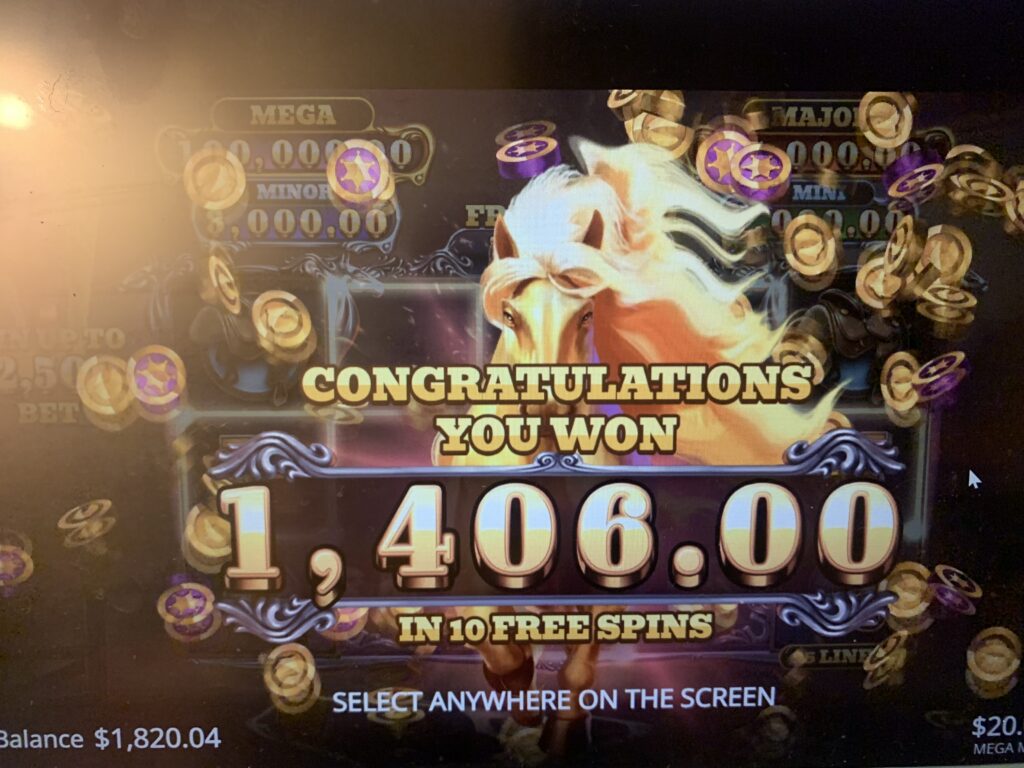
It is easy to feel successful when the balance is climbing. You deposit, you play, you hit a few good spins, and suddenly you’re looking at a number that makes you smile. Maybe you started with $100 and now you have $300. Then $500. You feel good. You feel like you’ve figured something out. You tell yourself, “Maybe I can make it a little higher.”
And this is where things can get interesting.
Because the next question is not always, “How much more can I win?”
Sometimes the better question is, “How much of this win am I willing to give back?”
I have learned that being ahead is not the end of the story. Protecting that money is also a decision. There have been times when I knew I was ahead, knew I should probably stop, and still continued playing. That is one of the most frustrating feelings because afterwards you can look back and realize that the warning was there. You saw the balance. You knew what could happen. You just didn’t act on it.
That is why I now think differently about the word “win.” If I win money but then give most or all of it back because I couldn’t stop, I don’t feel the same way about that session as I would if I had recognized the win and protected it. The withdrawal button may not be as exciting as a bonus round, but it can be one of the most important buttons on the screen.
The Withdrawal Button Is Not Your Enemy
I used to think of withdrawing as the end of the fun. Now I see it differently. A withdrawal is simply another decision I can make.
If I’m happy with my balance, I don’t have to keep playing just because the game is still available. The game will be there tomorrow. It will probably be there next week too. It isn’t going to pack its little suitcase and move away because I decided to stop tonight.
Sometimes we become afraid that if we stop now, we might miss the big win that could have happened on the next spin. Of course, that is possible. But there is another possibility that we don’t always think about: the next spin could also take back part of the money we already won.
That is the part I try to remember.
When I’m ahead, I don’t want to think only about what I could win next. I want to think about what I already have.
Because a win that stays with you is much more satisfying than a win that only existed on the screen for twenty minutes.
Your Life Doesn’t Disappear When You Open a Slot Game
One of the reasons I created Spin Mindfully is because I believe we sometimes forget that the person playing the slot is a whole person. We are not just a username and a balance on a screen. We have jobs, families, responsibilities, hobbies, relationships, bills, plans, and sometimes a garden that desperately needs attention because apparently tomatoes do not care that we wanted to play slots tonight.
The slot sees none of that.
I do.
That is why I believe responsible play starts before the first spin. Before opening the game, I can ask myself how I’m feeling, whether I’m rested, how much time I have, and what I’m comfortable spending. None of those things change the mathematical outcome of the slot, but they can help me make decisions that fit the rest of my life.
And I think that is an important distinction. I don’t want to remove the fun from gambling. I want to keep the fun in the right place.
For me, slots are entertainment. They are not a replacement for income, and a winning session doesn’t suddenly turn me into a financial genius. I’m still the same person who has laundry waiting somewhere.
I’ve Made Mistakes, and That’s Part of Learning
I think it is important to say this because responsible gambling conversations can sometimes sound like they are written by people who have never made a mistake.
I have.
I’ve had sessions where I made decisions I wasn’t happy with afterwards. I’ve played longer than I intended. I’ve kept going when I knew I should stop. I’ve watched a good balance become a much smaller one because I thought I could squeeze out just a little more.
And every one of those experiences taught me something.
I don’t think we become better players by pretending we never make mistakes. We become better by recognizing the mistake, understanding why it happened, and trying not to repeat it.
For me, one of the biggest lessons has been recognizing that fatigue and emotion can change the way I play. When I’m rested and calm, I’m much more likely to think before I act. When I’m tired, frustrated, or caught up in the excitement of a win, I have to be much more careful.
That awareness has become more valuable to me than searching for some secret strategy that supposedly beats the slot.
Maybe the Best Spin Is the One You Don’t Make
There is something funny about slot playing. We spend so much time looking for the winning spin that we sometimes forget that we are allowed to not spin.
Not spinning isn’t very exciting. Nothing flashes. Nobody celebrates. There is no jackpot sound effect. The screen just sits there looking at you.
But sometimes that is exactly what we need.
Maybe you’re tired. Maybe you’ve been playing longer than you planned. Maybe you’re no longer having fun. Maybe your bet has started creeping upward. Maybe you are trying to recover money you already lost. Or maybe you are sitting there with a nice win and wondering whether you should push it just a little further.
You don’t need a dramatic reason to stop.
Sometimes “I’m happy with this” is enough.
After 20 Years, This Is What I Keep Coming Back To
After more than 20 years of online slot play, I still enjoy the games. I still enjoy the excitement of a good hit and the anticipation of seeing what happens next. But I’ve learned that the game itself is only one part of the experience. The other part is me.
How I feel matters.
How much I’ve slept matters.
Whether I’m rushing matters.
Whether I’m paying attention matters.
Whether I’m making decisions because I want to or because I’m trying to recover something matters.
And perhaps most importantly, whether I know when I’m satisfied matters.
I don’t believe a player has to be perfect. I certainly am not. I believe we can play, make mistakes, learn from them, laugh at ourselves occasionally, and become more aware of our own habits.
For me, mindful spinning isn’t about taking the fun away. It’s about remembering that the slot is the entertainment, not the boss.
The machine doesn’t decide when I stop.
The machine doesn’t decide how much I bet.
The machine doesn’t decide whether I need sleep.
And the machine certainly doesn’t decide what happens to my winnings.
I do.
So before you make that next spin, take a breath. Look at the screen. Look at the time. Look at your balance. And, perhaps most importantly, look at yourself.
If you’re rested, comfortable, and enjoying the entertainment, that’s one thing.
If you’re exhausted, frustrated, rushing, or thinking, “I just need one big win to fix this,” that’s another.
Sometimes the smartest decision isn’t finding a better game.
Sometimes it isn’t increasing the bet.
Sometimes it isn’t chasing the next bonus.
Sometimes it is simply saying, “That was enough for tonight.”
And if you’ve had a good win, remember this little lesson from a girl who has spent more than 20 years learning it the hard way:
Winning feels good. Keeping the win feels even better.
That, to me, is what Spin Mindfully is all about.
Mindful Spins. Happy Wins!
— Caleb Rensai
Spin Mindfully
This article is for education and entertainment purposes only. It is not financial, legal, medical, or gambling advice. Slot outcomes are random, and past results do not predict future results. Always play within limits that are appropriate for you.