
It’s Friday night, and I finally have a little time to sit down and write. This year has been busy, and somehow the garden ended up getting the same treatment as my writing schedule: both started later than planned. Fortunately, the garden has been much more forgiving. The tomatoes are looking surprisingly good, and the flowers have filled in nicely. I may have started late, but apparently the plants decided to give me a second chance.
There is something very satisfying about growing your own tomatoes. You put in a little work, wait patiently, and eventually you get something you can actually eat. I sometimes wish gambling worked the same way. Plant $20, water it twice, and wait for a jackpot tomato. Unfortunately, that’s not how it works.
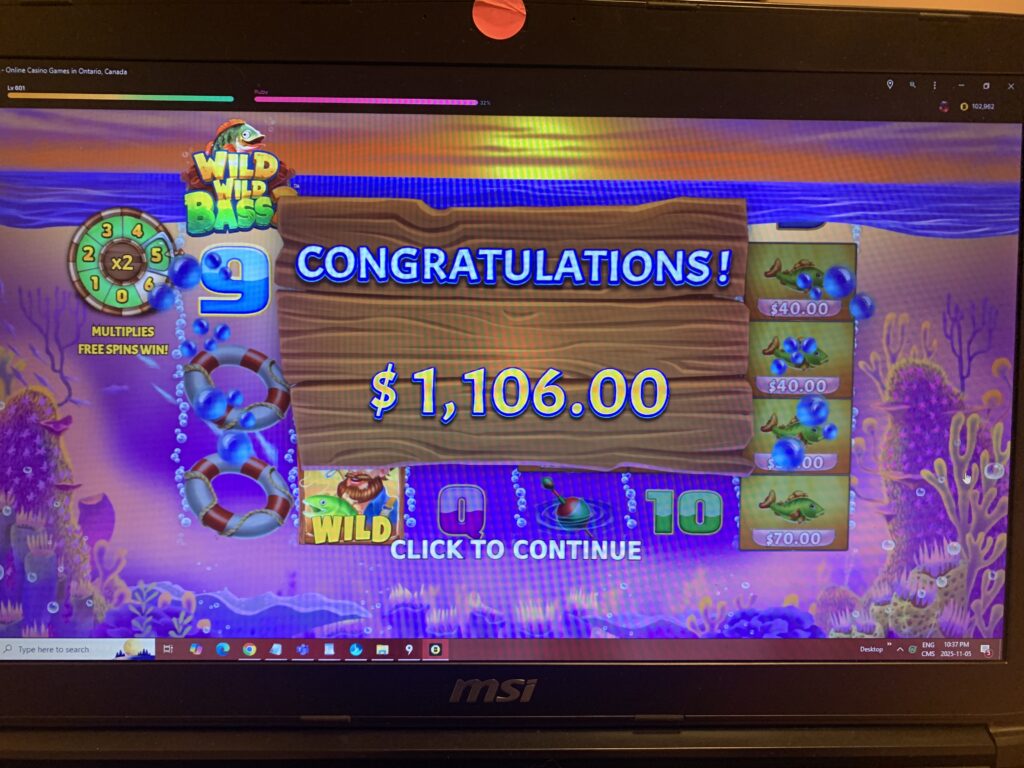
If you enjoy slot games, there is something I think is worth remembering this Friday night: don’t fall in love with a particular game.
I know how easy it is to do. You find a game that treated you well last week, perhaps you had a nice win or several enjoyable sessions, and suddenly you feel that you’ve found “your” game. You recognize the graphics, you know the bonus features, and before long you’re greeting the game like an old friend.
But the game doesn’t remember you.
It doesn’t know that you won on it last Tuesday. It doesn’t know that you played it for three hours last weekend. It doesn’t know that you defended it when your friend said, “That game never pays.”
And it certainly doesn’t owe you another win.
That’s where understanding the random number generator, or RNG, becomes important.
The RNG is the technology used to determine the outcomes of spins in regulated electronic gaming. In simple terms, it continually generates numerical results, and the game uses those results to determine the outcome when a spin is made. The exact mathematics can be complicated, but the important point for players is quite simple: previous results don’t tell you what the next result will be.
This can be surprisingly difficult for our brains to accept because humans are natural pattern hunters.
If we win several times in a row, we might think the game is “hot.” If we go through a long stretch without a meaningful win, we might think the game is “due.”
Our brains love these explanations.
Unfortunately, the RNG isn’t listening.
It isn’t keeping a diary that says, “Well, I haven’t paid Caleb for twenty spins, so perhaps I should do something nice for him.”
If only machines had such manners.
A game that provided a good experience last week doesn’t become more likely to provide the same experience this week simply because you enjoyed it before. Likewise, a game that hasn’t produced a win recently isn’t necessarily preparing to make up for it.
A past result is a memory, not a prediction.
That’s one of the reasons I think it is healthier to enjoy a game without becoming attached to it.
You can have a favourite game. There is nothing wrong with that. You might like the theme, the music, the bonus features or simply the way it looks. Just remember that liking a game and expecting a particular outcome from it are two very different things.
The same idea applies to gambling more generally. We can make choices about our budget, how much time we want to spend playing and when we want to stop. What we cannot control is the outcome of an individual spin.
That distinction is important.
And there is another factor that doesn’t get enough attention: us.
The machine doesn’t get tired. We do.
The machine doesn’t have a busy week at work. We do.
The machine doesn’t have dinner to cook, emails to answer, laundry waiting, or a garden that somehow produces twelve tomatoes at the same time. We do.
When we’re tired or distracted, our decision-making can change. We may start playing longer than planned or become less disciplined about the limits we set for ourselves. The game hasn’t changed, but our state of mind has.
That’s why I think taking a break is sometimes more valuable than finding another game.
A good session doesn’t need to become a long session.
A good win doesn’t need to become another hour of play.
And enjoying a particular game doesn’t mean you have to keep playing it indefinitely.
Sometimes the best decision is simply to say, “That was fun,” and move on with your evening.
This is also why I don’t put much faith in the idea that a particular machine or game is “hot” because it has recently produced several wins. Likewise, I don’t assume a game is “cold” because it hasn’t produced a result I wanted.
The mathematics doesn’t know what happened last week.
And neither does my favourite slot game.
This doesn’t mean you can’t enjoy gambling. It means understanding what you’re actually doing can make the experience more realistic and, hopefully, more enjoyable.
For me, that’s what Spin Mindfully has always been about.
I’m not interested in telling people that there is a secret formula that guarantees a win. There isn’t one. I’m more interested in understanding the psychology, mathematics and behaviour surrounding gambling so we can make better decisions.
And sometimes, the smartest decision isn’t about choosing a better game.
It’s about choosing your limits before you start.
That’s something I have learned from both gambling and gardening. With the garden, I can prepare the soil, plant the seeds, water them and give them sunlight, but I can’t command a tomato to ripen by Tuesday. Nature has its own schedule.
Gambling is similar in one important way: you can control your decisions, but you cannot control the outcome.
So this Friday night, if you sit down with your favourite slot game, enjoy it for what it is. Enjoy the entertainment, appreciate the design, and if you happen to have a good session, enjoy that too.
Just don’t start believing the machine has developed a personal relationship with you.
It hasn’t.
If anything, the machine probably has the healthiest relationship in the room. It doesn’t get excited, frustrated, disappointed or tempted. It simply does what it was designed to do.
We are the complicated ones.
And perhaps that’s why the most useful thing a slot player can learn isn’t how to predict the next spin. It’s learning how to recognize our own habits, set reasonable limits and step away when we’ve had enough.
Meanwhile, I’ll be checking the garden again this weekend. The tomatoes are doing well, the flowers are looking great, and I’m still pretending I knew exactly what I was doing when I planted everything late.
At least with gardening, when I walk away from the garden, I don’t feel tempted to put another $20 into the tomato patch.
That would be a very expensive salad.
Have a wonderful Friday evening, enjoy the weekend, and remember: you can enjoy a game without believing the game belongs to you.
A favourite game is still just a game.
And tomorrow, there will always be another one.
Caleb Rensai
Spin Mindfully — Mindful Spins. Happy Wins!